
The City of Irvine actively plants and replaces trees to sustain and grow a healthy urban forest. Ongoing planting efforts are essential to maintaining canopy coverage, enhancing neighborhood aesthetics, and ensuring long-term environmental benefits.
Tree Planting & Replacement
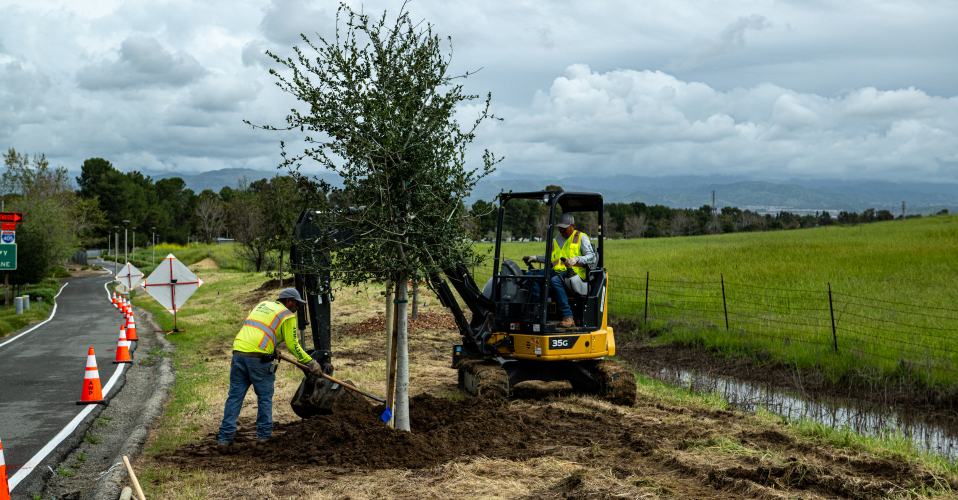
Maintaining a Healthy Tree Population
Maintaining a Healthy Tree Population
Like all living systems, an urban forest naturally experiences some level of tree loss each year. A healthy urban forest typically loses approximately 2% of its tree population annually due to factors such as storms, pests, disease, age, construction, and infrastructure conflicts.
Based on the size of Irvine’s City-maintained tree inventory, this means the City must replace approximately 900 to 1,500 trees each year to maintain a stable tree population and prevent canopy loss.
Capital Improvement Tree Planting Program
Capital Improvement Tree Planting Program
In 2025, the Irvine City Council approved a Capital Improvement Program (CIP) project with a budget of $1 million, extending through Fiscal Year 2026/27.
This investment supports the planting of over 2,000 new trees throughout the City, with a focus on:
• Filling existing vacant tree sites
• Expanding canopy coverage in priority areas
• Enhancing streetscapes, parks, and public spaces
Filling Vacant Tree Sites
Filling Vacant Tree Sites
The City has identified thousands of viable vacant planting locations across Irvine. These sites were intentionally designed to support trees and represent one of the most effective opportunities to expand the urban forest.
Planting in these locations helps:
• Increase shade and reduce urban heat
• Improve neighborhood aesthetics and walkability
• Maximize the long-term benefits of Irvine’s planned landscape infrastructure
Strategic Planting Approach
Strategic Planting Approach
All tree planting is guided by City standards and best practices to ensure long-term success. This includes:
Selecting climate-appropriate and site-compatible species
• Promoting species diversity to improve resilience
• Providing establishment care, including watering and early maintenance
• Coordinating planting efforts with infrastructure and community needs
CERT Program